Thursday, May 16, 2019

Whether One Generation of Men Has a Right to Bind Another Is a Question Pertaining to the Fundamental Principles of Every Government

The concluding article of Lafayette's draft, asserting the right of successive generations "to examine and, if necessary, to modify the form of government" seemed to echo Jefferson's Declaration of Independence. At this distance, in view of the close association of Enlightenment figures from France and the United States, it is difficult to say who influenced whom. It must have been difficult even in their own generation. Distinguished historians have cited Jefferson's letter of September 6, 1789, to James Madison as an example of radically original thought, yet there is strong evidence that its central idea was simply borrowed from an Englishman and amplified by Jefferson. The American minister wrote:
The question whether one generation of men has a right to bind another, seems never to have ben started either on this or our side of the water. Yet it is a question of such consequences as not only to merit decision, but place also, among the fundamental principles of every government. . . . I set out on this ground, which I suppose to be self evident, 'that the earth belongs in usufruct to the living': that the dead have neither powers nor rights over it. . . . 
It may be proved that no society can make a perpetual constitution, or even a perpetual law. The earth belongs always to the living generation. They may manage it then, and what proceeds from it, as they please, during their usufruct. . . . 
This principle that the earth belongs to the living, and not to the dead, is of very extensive application and consequences, in every country, and most especially in France. 
--Alf J. Mapp Jr., Thomas Jefferson: America's Paradoxical Patriot (Lanham, MD: Rowman and Littlefield Publishers, 2008), 268.


Wednesday, May 15, 2019

In Obedience to the Principle So Often Attributed to Sir Thomas Gresham, Paper Money Issued by the National Bank Was Driving Out Dependable Coinage

Jefferson charged that the national debt had been grossly mishandled. It had become too large to be taken care of by the ordinary sources of revenue, so that the impost had been raised to such a height that the collectors might have to bear arms. Even so, the sums obtained were still insufficient to service the debt, and the federal government had to resort to excise taxes. This expedient was so unpopular as to invite mass resistance. To the Revolutionary generation, revolt against taxation was not inconceivable.

In obedience to the principle so often attributed to Sir Thomas Gresham, paper money issued by the National Bank was driving out dependable coinage. This ghost currency served only the lenders, whose annual profit of 10 to 12 percent was "taken out of the pockets of the people." The bank, which was supposed to stimulate commerce and insure national prosperity, was imperiling both commerce and agriculture by substituting "paper speculation" for true production.

The political and social effects of the bank, he argued, were even worse than the economic. The institution's policies had created in Congress a "corrupt squadron." The term now conjures up visions of outright bribery but Jefferson meant simply conflict of interest in that Congressmen who were stockholders in the bank were also framing the legislation that governed it.

--Alf J. Mapp Jr., Thomas Jefferson: America's Paradoxical Patriot (Lanham, MD: Rowman and Littlefield Publishers, 2008), 308.


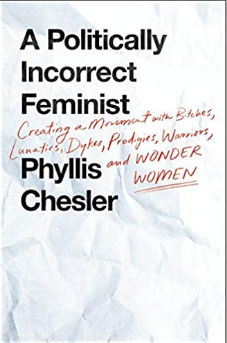
Feminists Brought with Them Its Tactics of Intimidation and Interrogation; Many Radical Lesbians Were Lesbian Supremacists Who Demanded Primacy in Terms of Victimhood

Only now, looking back, do I remember how much of the early years of second-wave feminism was painful.

Individual petty jealousies and leaderless group bullying were frightening and ugly. “Mean girls” envied and destroyed excellence and talent; in short, they ate their most gifted leaders.

Feminists who had left the Left brought with them its tactics of intimidation and interrogation.

Many radical lesbians were lesbian supremacists who demanded primacy in terms of victimhood. Some also outed other women in cruel and public ways.

Thus, right at the beginning of paradise, trouble rumbled both overhead and beneath our feet. Trouble drove many a good feminist far, far away, but many of us who could still taste paradise on our tongues remained for the duration.

The psychologist Naomi Weisstein told me that within three years of its formation, the Chicago Women’s Liberation Rock Band turned on her in pretty much all the familiar feminist ways. The Chicago Women’s Liberation Union, which she had helped found in 1969, had already trashed her as a “star” and demanded that she surrender her speaking engagements to less eloquent speakers. Band members followed suit, and, fraught with envy and untold hidden agendas, the band disbanded in 1973.

Here’s what they were thinking: if all women were supposed to be equal, then no woman should be more appreciated or better known than any other.

Although unacknowledged, the trashing of the late 1960s and 1970s was ultimately the psychological reason our mass radical movement ground to a halt. The ideological disputes played out in breathlessly vicious ways. But it didn’t stop me. Luckily, I was blessed with the ability to remain connected to women on both sides of many of our major wars.

--Phyllis Chesler, A Politically Incorrect Feminist: Creating a Movement with Bitches, Lunatics, Dykes, Prodigies, Warriors, and Wonder Women (New York: St. Martin's Press, 2018), e-book.


Tuesday, May 14, 2019

Alan Sokal's Hoax Brought into the Open a Widespread Reaction Against the Sesquipedalian Posturings of Postmodern Theory and the Futility of the Identity Politics that So Often Travels with It

For us, however, the greatest surprises have been pleasant ones. Chief among them was the international uproar occasioned by the publication of Alan Sokal’s now-famous hoax, “Transgressing the Boundaries: The Transformative Hermeneutics of Quantum Gravity,” in the trendy cultural studies journal Social Text. The ongoing saga of Sokal’s pleasantry is instructive on several levels. The joke arose from Sokal’s reading of our book. Originally, as a principled leftist, he suspected that we two might be conservatives as charged, advancing antiliberal agenda under the pretext of defending science. However, he ultimately found much of our argument persuasive. In fact, his own researches convinced him that we had in some respects understated the case. His dismay at the clear evidence that a once-vigorous intellectual tradition of radical dissent is slipping into irrationality prompted him to put aside physics for a few weeks in the fall of 1994 in order to compose his delightful parody. It was submitted to Social Text, in all apparent seriousness, early that winter. Unknown to Sokal at the time, that publication, under the leadership of Prof. Andrew Ross, was preparing a special issue on what it dubbed “the science wars.” The intention was to vindicate assorted poststructuralist, multicultural, and feminist critiques of science and to denounce their critics, most notably the depraved Gross and Levitt. Sokal’s piece, with its seconding and fulsome praise of such intentions, was snapped up by the editors.

The tainted issue appeared in due course (May 1996), Sokal’s revelation of the hoax appeared a few days later in Lingua Franca, and then all hell broke loose. Predictably, some conservatives crowed, citing the “Sokal Text” affair as further proof that left-wing sympathies equate to outright dementia (notwithstanding Sokal’s own leftist views). But the reaction of a large number of left-intellectuals was more lasting and perhaps more significant for the academy. Sokal’s hoax brought into the open a widespread reaction, years in the making, against the sesquipedalian posturings of postmodern theory and the futility of the identity politics that so often travels with it. Cutting-edge celebrities, long used to dictating the tone of political discussion in “progressive” circles, suddenly found themselves on the hot seat. As of this writing, the recriminations continue with no sign of abatement.

--Paul R. Gross and Norman Levitt, preface to the 1998 edition of Higher Superstition: The Academic Left and Its Quarrels with Science (Baltimore: The Johns Hopkins University Press, 1998), e-book.


By Any Reasonable Standard, Feminist Epistemology Should Have Expired in 1994; Feminist Epistemology Should Not Be Taken Seriously

Feminist epistemology consists of theories of knowledge created by women, about women's modes of knowing, for the purpose of liberating women. By any reasonable standard, it should have expired in 1994. Working independently, Gross and Levitt in Higher Superstition, Sommers in Who Stole Feminism? as well as Patai and Koertge in Professing Feminism all identified fatal flaws in the feminist epistemological program. More detailed analyses appeared in Feminist Epistemology: For and Against, a special issue of the The Monist, edited by Haack. The simple bottom line of all these critiques is succinctly expressed by Pinnick in a 1994 issue of Philosophy of Science: "No feminist epistemology is worthy of the name, because such an epistemology fails to escape well known vicissitudes of epistemic relativism. The central thesis of this article is that feminist epistemology should not be taken seriously."

There is a long history of cogent criticisms of feminist epistemology--recall, for example, Radcliffe Richards's beautifully argued book, The Sceptical Feminist, which appeared in 1981. And at a symposium in 1980, where Harding and Hartsock were already decrying Bacon's alleged rape metaphors, I vigorously criticized their "standpoint" epistemology: "One final polemical remark: If it really could be shown that patriarchal thinking not only played a crucial role in the Scientific Revolution but is also necessary for carrying out scientific inquiry as we know it, that would constitute the strongest argument for patriarchy that I can think of! I continue to believe that science- even white, upperclass, male-dominated science--is one of the most important allies of oppressed people."

--Noretta Koertge, "Feminist Epistemology: Stalking an Un-Dead Horse," in The Flight from Science and Reason, ed. Paul R. Gross, Norman Levitt, and Martin W. Lewis (New York: New York Academy of Sciences, 1996), 413.


Monday, May 13, 2019

Opposing Theories Hold that Changes in Solar Intensity and Activity Cause Incessant Changes in Global Temperature, Which in turn Causes Natural Changes in Atmospheric Carbon Dioxide Content

Opposing theories hold that changes in solar intensity and activity cause incessant changes in global temperature, which in turn causes natural changes in atmospheric carbon dioxide content. These changes dominate, to the extent that it is impossible to discern any effect on the climate or on atmospheric carbon dioxide from man-made greenhouse gases. The theories provide a clear explanation for the roller coaster behavior of global temperature over centuries and millennia.

These alternative explanations are not satisfactory to the followers of the greenhouse disaster scenario teachings. If the current warming is just as natural as those that went before, there is no role for politics. The greenhouse hypothesis is politically correct, demands a political solution to the "warming problem" and refers to all other notions as "minority views." The greenhouse hypothesis is pursued as a goal in itself; science becomes politics as majority rule is accepted in determining scientific issues.

--M. Mihkel Mathiesen, Global Warming in a Politically Correct Climate: How Truth Became Controversial (New York: iUniverse Star, 2004), 71.


Carbon Dioxide Has Not Controlled Earth's Past Temperatures; Carbon Dioxide Has Been a Lagging Indicator; Its Concentrations Rising about 600-800 Years AFTER the Temperatures Warm

Recently the COlevels in the Earth's atmosphere and temperatures on the Earth's surface have both been rising. Does that mean that high COlevels have been causing the Earth's warming? Or is it just coincidence?

According to the greenhouse theory, more COin the Earth's atmosphere will trap more of the Earth's own radiated heat, warming the lower atmosphere and ultimately the surface of the planet--all other things being equal. But the fact that the Earth's temperature has warmed only slightly since 1940, despite the huge clouds of greenhouse gases emitted from human activities, provides evidence that the human greenhouse effect must be so small that it presents little threat to the planet or its people. This is especially true since each additional unit of COcauses less warming than the previous unit. . . .

The Antarctic ice cores tell us that the Earth's temperatures and COlevels have tracked closely together through the last three ice ages and global warmings. However, COhas been a lagging indicator, its concentrations rising about 600 to 800 years after the temperatures warm.

--S. Fred Singer and Dennis T. Avery, Unstoppable Global Warming: Every 1,500 Years, updated and expanded ed. (Lanham, MD: Rowman  and Littlefield Publishers, 2008), 107-108.


I Watched My Chosen Discipline—Climatology—Get Hijacked and Exploited in Service of a Political Agenda; It Undermines the Environmental Movement by setting up a Classic ‘Cry Wolf’ Scenario

I’ve studied climate both scientifically and academically for over forty years after spending eight years studying meteorology and observing the weather as an aircrew and operations officer in the Canadian Air Force. When I began the academic portion of my career, global cooling was the concern, but it was not a major social theme. During the 1980s the concern switched to global warming which became a major political, social and economic issue.

I watched my chosen discipline—climatology—get hijacked and exploited in service of a political agenda, watched people who knew little or nothing enter the fray and watched scientists become involved for political or funding reasons—willing to corrupt the science, or, at least, ignore what was really going on. The tale is more than a sad story because it set climatology back thirty years and damaged the credibility of science in general.

It also undermined the environmental movement by incorrectly claiming massive environmental damage and setting up a classic ‘cry wolf’ scenario. It is the greatest deception in history and the extent of the damage has yet to be exposed and measured.

There have been, of course, other sad deceptions throughout history, but all of them were regional, or, at most, continental. The deceptive idea that human-generated COcauses global warming or climate change impacted every person in the entire world, thus it reflects Marshall McLuhan’s concept of the global village. This book shows how the deception was designed to be global by involving every nation through the agencies of the United Nations. Historians with the benefit of 20:20 hindsight will wonder how such a small group was able to achieve such a massive deception.

--Tim Ball, preface to The Deliberate Corruption of Climate Science (Mount Vernon, WA: Stairway Press, 2014), e-book.


Sunday, May 12, 2019

It Is Taboo to Say This, But It Must Be Said: The Novel Theories of Subtle But Pervasive Racial Prejudice—“White Privilege,” “Cultural Appropriation,” and so forth—Are Complete Nonsense

I am attempting to do for race relations what Glassner did for consumer advocacy: use hard data to penetrate an intentionally created fog of exaggerations and lies and expose a surprisingly positive reality. Many Americans today, especially on the activist left, seem to believe that the United States is a racist hell-hole on the brink of civil war. In the mainstream media we hear almost constant talk about scary new forms of racism: “white privilege,” “cultural appropriation,” and “subtle bigotry.” The Black Lives Matter (BLM) movement argues that a near-genocide is underway in 2019 America, including police and vigilante murders of “tens of thousands” of Black men annually. The platform of The Movement for Black Lives, one of the founding documents of Black Lives Matter, claims that immediate reparations for slavery and the opening of America’s borders are the only ways that minorities can be compensated for the harms currently being done to us. . . .

It is taboo to say this, but it must be said: The novel theories of subtle but pervasive racial prejudice—“white privilege,” “cultural appropriation,” and so forth—are complete nonsense. And many of the hate crimes cited in support of those theories never happened. . . .

You will read about almost one hundred fake hate crimes in this book. It is probable that most widely reported recent hate crimes have been hoaxes.

--Wilfred Reilly, introduction to Hate Crime Hoax: How the Left Is Selling a Fake Race War (Washington, DC: Regnery Publishing, 2019), e-book.


Simone de Beauvoir, Like the Vast Majority of Feminists, Admires Marxist-Leninism and the Soviet Union Because They Promise a World Where Men and Women Would Be Equal

Simone de Beauvoir, like the vast majority of feminists, regards the radical alteration of parenting as more than a utopian fantasy. She finds it "easy to visualize" a world "where men and women would be equal,"
for that is precisely what the Soviet Union promised: women trained and raised exactly like men. . . . [M]arriage was to be based on a free agreement that the spouses could break at will; maternity was to be voluntary; pregnancy leaves were to be paid for by the State, which would assume charge of the children, signifying not that they would be taken away from their parents, but that they would not be abandoned to them. 
De Beauvoir is so far from alone among feminists in admiring Marxist-Leninism that this admiration, together with hostility to "capitalism," can be considered virtually a further distinguishing mark of feminism. The main criticism offered of the Soviet Union is that it has not gone far enough. Kate Millett sides with Trotsky against Lenin because "there was no realization [on Lenin's part] that while every practical effort should be made to implement a sexual revolution, the real test would be in changing attitudes." To be sure, feminists are attracted primarily to the ideas that the Soviet state proclaims itself as embodying, rather than to the Soviet regime itself, but with that understood, a great many well-known feminists, including de Beauvoir, Millett, Firestone, Bleier, Mitchell, Chodorow, MacKinnon, Steinem, Sheila Rowbotham, Margaret Benston, Angela Davis, Eli Zaretsky, Evelyn Reed, Barbara Ehrenreich, Vivian Howe, and Rayna Rapp identify themselves as socialists or Marxists of some sort. According to Germaine Greer, "the forcing-house of most of the younger women's liberation groups was the university left wing."

--Michael Levin, Feminism and Freedom (New Brunswick, NJ: Transaction Books, 1988), 26.

Saturday, May 11, 2019

It Is Not by Accident that Feminism Has Had Its Major Impact through the Necessarily Coercive Machinery of the State rather than through the Private Decisions of Individuals; It Is a Totalitarian Ideology

This, in short, is the thesis of the present book: It is not by accident that feminism has had its major impact through the necessarily coercive machinery of the state rather than through the private decisions of individuals. Although feminism speaks the language of liberation, self-fulfillment, options, and the removal of barriers, these phrases invariably mean their opposites and disguise an agenda at variance with the ideals of a free society. Feminism has been presented and widely received as a liberating force, a new view of the relations between the sexes emphasizing openness and freedom from oppressive stereotypes. The burden of the present book is to show in broad theoretical perspective and factual detail that this conventional wisdom is mistaken. Feminism is an antidemocratic, if not totalitarian, ideology.

Feminism is a program for making different beings--men and women--turn out alike, and like that other egalitarian, Procrustes, it must do a good deal of chopping to fit the real world into its ideal. More precisely, feminism is the thesis that males and females are already innately alike, with the current order of things--in which males and females appear to differ and occupy quite different social roles--being a harmful distortion of this fundamental similarity. Recognizing no innate gender differences that might explain observed gender differences and the broad structure of society, feminists are compelled to interpret these manifest differences as artifacts, judged by feminists to benefit men unfairly. Believing that overtly uncoerced behavior is the product of oppression, feminists must devise ever subtler theories about the social pressures "keeping women in their place"--pressures to be detected and cancelled.

--Michael Levin, overview to Feminism and Freedom (New Brunswick, NJ: Transaction Books, 1988), 2-3.


Friday, May 10, 2019

The American Nickname ‘‘Yankee’’ Originated in the Dutch Word for ‘‘Smuggler’’ Suggesting that Violation of European Economic Restrictions Had Been Second Nature to the Colonists

The challenge to Whitney’s claim of originality rested on supposedly preexisting devices already in use outside the borders of the United States. Southern juries and state legislatures believed that the cotton gin was brought over from Europe rather than invented by Whitney because just about everywhere they turned they encountered imported technology. Whitney’s failure to cash in on the fruits of his invention highlights the central paradox of the emerging American understanding of intellectual property. The United States enacted a patent law in 1790 that restricted patent protection exclusively to original inventors and ruled that prior use anywhere automatically invalidated a patent. Alas, this principled commitment to absolute intellectual property had little to do with reality. Smuggling technology from Europe and claiming the privileges of invention was quite common and most of the political and intellectual elite of the revolutionary and early national generation were directly or indirectly involved in technology piracy. And they were following in the footsteps of their ancestors. Americans had welcomed such practices since the early days of European colonization. The American nickname ‘‘Yankee’’ originated in the Dutch word for ‘‘smuggler,’’ and suggests that violation of European economic restrictions had been second nature to the colonists from the early days of settlement.

--Doron S. Ben-Atar, introduction to Trade Secrets: Intellectual Piracy and the Origins of American Industrial Power (New Haven: Yale University Press, 2004), xv.


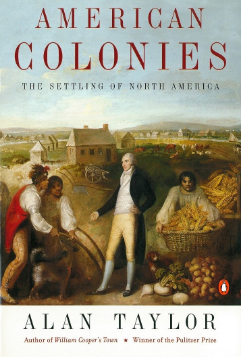
Gentry Families of the West Indian Planter Elite Combined with the London Merchants Who Imported Sugar to Compose a Formidable Sugar Interest--More Influential Than Any Other Colonial Interest

On Barbados, the great planters monopolized seats in the elected assembly as well as the appointed council and judiciary. Because most land belonged to a small elite, the property requirement disenfranchised about three-quarters of the white men (to say nothing of either the white women or the black majority, neither of whom had any political standing). No other English colony so tightly restricted the electoral franchise.

The planter elite also enjoyed unusual clout in Parliament and with the crown. Many English gentry families possessed investments and sons in Barbados, and many successful planters retired to England and entered the gentry class by purchasing country estates. In Parliament these gentry families combined with the great London merchants who imported sugar to compose a formidable "sugar interest"--more influential than any other colonial interest. The sugar lobby protected the planters from the nearly ruinous taxes the crown levied on Chesapeake tobacco. In 1668-69 the West Indian sugar crop sold for about £180,000 after it paid about £18,000 in customs duty--compared with the £50,000 reaped by Chesapeake planters over and above their customs duty of £75,000. The Chesapeake planter worked primarily to benefit the crown; the West Indian planter kept most of the value his slaves made.

--Alan Taylor, American Colonies: The Settling of North America, The Penguin History of the United States 1 (New York: Penguin Books, 2002), 216.


Thursday, May 9, 2019

The British Prime Minister Lord North (the Prime Minister Who Lost America) Used to Say that Jamaican Planters Were the Only Master He Ever Had

The jewel in the British imperial crown in eighteenth-century plantation colonies was undoubtedly Jamaica. It may have been a failed settler society, with white population persistently low after the disasters of the 1690s, especially the advent of regular bouts of deadly epidemic disease. The proportion of black to white was too high for contemporary comfort, and the colony was full of transients with relatively little commitment to developing a coherent community ethos and collective identity in the ways that happened in established colonies of British North America. But Jamaica was a stunning success in imperial terms. It was not only the plantation colony par excellence, the colony in which the large integrated plantation was most dominant, and in which the values and structures of the plantation was most pronounced. Strategically, it was also immensely important to Britain as a strongly defended island set among the established American colonies of Spain and the growing colonies of France in the Antilles. Most important, it was the wealthiest part of the British empire. Overall colonial wealth might have been slightly higher in the longer settled and much more populous colony of Virginia, and individual planters in St. Kitts and Grenada may have been able to acquire more wealth from their enslaved population than Jamaicans; but no eighteenth-century British American colony matched Jamaica as the quintessential plantation colony, with the richest and most influential planter ruling elite.

By the eve of the Seven Years’ War in 1756, the natural historian Dr. Patrick Browne declared Jamaica “not only the richest, but the most considerable colony at this time under the government of Great Britain.” It was an island that surpassed “all the other English sugar-colonies, both in quantity of land and the conveniencies of life.” It was “so advantageously situated, in regard to the main continent, that it has been for many years looked upon, as a magazine for all the neighboring settlements in America” and “the quantity or value of its productions, the number of men and ships employed in its trade [and] the quantity of valuable commodities imported there from various parts of Europe.” Browne wanted to show in part how far Jamaica “may yet be improved.”

The British prime minister Lord North used to say of Jamaican planters that they were the only master he ever had. That was a considerable overstatement, but their wealth and political clout, exemplified in the mid-eighteenth century by the wealthy London magnate and absentee planter William Beckford (1709–1770), was sufficient for Jamaicans to get their way about most political matters affecting their island. The power that the small white population of Jamaica had was based on the extraordinary ability of its planters to grow sugar and the equally extraordinary abilities of its indigenous merchant class to extract bullion from Spanish America. Britons were mightily impressed. Despite its well-deserved reputation as a white person’s graveyard, Europeans flocked to the island to acquire great fortunes. Most died; some did indeed make fortunes. William Beckford’s family was one family that became immensely rich in Jamaica.

--Trevor Burnard, Planters, Merchants, and Slaves: Plantation Societies in British America, 1650-1820, American Beginnings, 1500-1900 (Chicago: University of Chicago Press, 2015), 157-158.


Wednesday, May 8, 2019

The Issues of Censorship and Copyright Were Closely Linked in the Eighteenth Century, As They Are Today; Copyright Is a Form of Monopoly Pricing Most Readers out of the Market

Indeed, the issues of censorship and copyright were closely linked in the eighteenth century, as they are today. Copyright is a form of monopoly, and long copyright terms restrict the circulation of books by eliminating competition and reducing production, thereby pricing most readers out of the market. Although the 1710 ‘‘Copyright Act’’ stipulated a fourteen-year copyright term, renewable once, stationers claimed a perpetual common law right in their copies independent of the statute; most argued their cases successfully in chancery for decades, until the House of Lords ruled against perpetual copyright in 1774. In the pivotal case of Donaldson v. Beckett (1774), Lord Effingham expressed concern that lengthy copyright terms impinged on the ‘‘Liberty of the Press,’’ thus ‘‘choaking the channel of public information.’’ Lord Chief Justice DeGrey and Lord Camden lamented the ‘‘engrossing’’ of knowledge that perpetual copyright allowed, Camden declaring that ‘‘science and learning are in their nature publici juris, and they ought to be as free and general as air or water.’’ In his landmark study The Reading Nation in the Romantic Period, William St. Clair concludes that the ‘‘high monopoly period’’ from 1710 to 1774 impeded the dissemination of books, a finding that ratifies the peers’ concern.

--Randy Robertson, Censorship and Conflict in Seventeenth-Century England: The Subtle Art of Division, The Penn State Series in the History of the Book (University Park, PA: Pennsylvania State University Press, 2009), 202-203.


To Promote the Publication of Catholic Counter-Reformation Literature, Kings Granted Copyrights (Privilèges), Cementing Relations between Monarchs and Printers

In the early years of the Reformation Calvinism spread quickly through France, encouraging some printers to set up in provincial towns either to meet the new demand or to compensate for the shortages of imported books provoked by the religious wars that developed. The Reformation also inspired an enormous Catholic publishing response that was to last for the next two centuries. In order to offset the influence of Calvin, Catholic apologists wrote many devotional works, all of which required printing in large quantities. In their desire to promote the publication of Catholic Counter Reformation literature, kings granted copyrights (privilèges), which helped cement relations between monarchs and printers.

The regulation of printing became an important part of the campaign for control. The Affair of the Placards—the simultaneous publication, on 17 October 1534, of broadsheets against the Catholic Eucharist in Paris and other French towns—constituted a turning point in the persecution of Protestantism in France by firmly linking heresy and sedition in the minds of royal officials. At least twelve men were arrested and convicted in this affair, and nine were burned at the stake. Henceforth, printers were increasingly persecuted. The celebrated Lyonnais scholar-printer Étienne Dolet was sentenced by the Parlement of Paris to be burned at the stake for blasphemy, sedition, and the selling of banned books. A man of fiery and volatile personality who had been arrested previously for trading in banned books, Dolet was hanged as a repeat offender and then burned. Dolet, not a Calvinist but a classically trained scholar and an accomplished humanist, was one of those scholar printers of the era who participated in the cosmopolitan republic of letters created by the advent of print. His persecution underlines how the Reformation made governments focus on shielding the faithful from corrupting influences.

--Jane McLeod, Licensing Loyalty: Printers, Patrons, and the State in Early Modern France, The Penn State Series in the History of the Book (University Park, PA: Pennsylvania State University Press, 2011), 23-24.


Tuesday, May 7, 2019

Copyright's Roots Literally Lie in Censorship; Queen Mary Created the Stationer's Company in 1557 to Control the Press and What Information the People Could Access

What about copyright? The roots literally lie in censorship. It was easy for State and church to control thought by controlling the scribes, but then the printing press came along, and the authorities worried that they couldn’t control official thought as easily. So Queen Mary created the Stationer’s Company in 1557, with the exclusive franchise over book publishing, to control the press and what information the people could access.When the charter of the Stationer’s Company expired, the publishers lobbied for an extension, but in the Statute of Anne (1710) Parliament gave copyright to authors instead. Authors liked this because it freed their works from State control. Nowadays they use copyright much as the State originally did: to censor and ban books.

--Stephan Kinsella, "How Intellectual Property Hampers the Free Market," The Freeman 61, no. 5 (June 2011): 17.


Mercantilist Literature Consisted Mainly of Writings on Behalf of Merchants and Businessmen Who Had the Usual Capacity for Identifying Their Own with the National Welfare

The mercantilist literature, on the other hand, consisted in the main of writings by or on behalf of "merchants" or businessmen, who had the usual capacity for identifying their own with the national welfare. Disinterested exposition of trade doctrine was by no means totally absent from the mercantilist literature, and in the eighteenth century many of the tracts were written to serve party rather than self. But the great bulk of the mercantilist literature consisted of tracts which were partly or wholly, frankly or disguisedly, special pleas for special economic interests. Freedom for themselves, restrictions for others, such was the essence of the usual program of legislation of the mercantilist tracts of merchant authorship.

--Jacob Viner, Studies in the Theory of International Trade (London: George Allen and Unwin, 1960), 59.


Monday, May 6, 2019

Adam Smith Concluded that "in the Mercantile System, the Interest of the Consumer Is Almost Constantly Sacrificed to that of the Producer"

Mercantilism, then, was not simply an embodiment of theoretical fallacies; for the laws were only fallacies if we look at them from the point of view of the consumer, or of each individual in society. They are not fallacious if we realize that their aim was to confer special privilege and subsidy on favored groups; since subsidy and privilege can only be conferred by government at the expense of the remainder of its citizens, the fact that the bulk of the consumers lost in the process should occasion little surprise.

Contrary to general opinion, the classical economists were not content merely to refute the fallacious economics of such mercantilist theories as bullionism or protectionism; they also were perfectly aware of the drive for special privilege that propelled the “mercantile system.” Thus, Adam Smith pointed to the fact that linen yarn could be imported into England duty free, whereas heavy import duties were levied on finished woven linen. The reason, as seen by Smith, was that the numerous English yarn-spinners did not constitute a strong pressure-group, whereas the master-weavers were able to pressure the government to impose high duties on their product, while making sure that their raw material could be bought at as low a price as possible. He concluded that the
motive of all these regulations, is to extend our own manufactures, not by their own improvement, but by the depression of those of all our neighbors, and by putting an end, as much as possible, to the troublesome competition of such odious and disagreeable rivals.
Consumption is the sole end and purpose of all production; and the interest of the producer ought to be attended to, only so far as it may be necessary for promoting that of the consumer. . . . But in the mercantile system, the interest of the consumer is almost constantly sacrificed to that of the producer; and it seems to consider production, and not consumption, as the ultimate end and object of all industry and commerce.
--Murray N. Rothbard, "Mercantilism: A Lesson for Our Times?" in Economic Controversies (Auburn, AL: Ludwig von Mises Institute, 2011), 642-644.

The Backstory of the Boston Tea Party: The East India Company Went Broke, So "A Fair Consumer" Suggested Beating the Black Market Smugglers by Dumping Surplus Tea on America

From the board, the desperate Laurence Sulivan came up with a plan to float a loan in Amsterdam, with the tea to be used as collateral: a rather lame suggestion, as the largest Dutch banks were also close to failure. An equally hopeless proposal came from Colebrooke, who wanted to ask investors in England for £1.5 million to refinance the business. With money so tight in London this was out of the question. But while these feeble ideas went the rounds, a more practical scheme had begun to emerge. In late September, a writer calling himself “A Fair Consumer” published a letter in the press that made a telling point. In London, wholesale Bohea cost three shillings and four pence a pound. In Amsterdam, where the taxes were tiny, the same packet of tea cost only one shilling and eight pence.

As everyone knew, this situation created the vast black market that ate away at the company’s position. The solution was obvious: turn the tables on the Europeans by slashing the price in London to the same low level even if the company took a temporary loss. By flooding the market with cheap tea, the company would drive the smugglers to the wall and cripple its competitors in the China trade.

It was only the germ of an idea, but gradually it evolved into a scheme to send the surplus tea to America. Before it could reach fruition, it would be warped out of shape by intrigue and political maneuver on both sides of the Atlantic. At times the story that follows will resemble an intricate jigsaw puzzle in the style of the rococo, but without it the Boston Tea Party would never have taken place.

--Nick Bunker, An Empire on the Edge: How Britain Came to Fight America (New York: Alfred A. Knopf, 2014), e-book.


In 1776 Adam Smith Attacked Mercantilism, the Policy Whereby British Sugar Was Given an Effective Monopoly on the Home Market in Return for Using British Ships and Buying British Manufactures

In other ways the sugar barons were losing their lustre. In 1776, the Scottish economist and philosopher Adam Smith published his hugely influential The Wealth of Nations, in which he argued in favour of free trade and against mercantilism, the policy whereby British sugar was given an effective monopoly on the home market in return for using British ships and buying British manufactures. The first sugar barons had hated the Navigation Acts, but by the middle of the eighteenth century, the protected British market that was part of the original deal was of overwhelming importance to the British sugar producers. Because of soil exhaustion and a failure to invest in new technologies, the British islands now needed four times the labour to produce the same sugar as the newer French possessions, led in production by St Domingue. This, of course, made British sugar more expensive, thus the British consumer paid up to 30 per cent more for his sugar than customers in other parts of Europe. A pamphleteer of 1761 estimated that what he called the ‘fraudulent Trading of the Sugar Planters’ had deprived the kingdom of ‘over and above Twelve Million Pounds Sterling’.

--Matthew Parker, The Sugar Barons: Family, Corruption, Empire, and War in the West Indies (New York: Bloomsbury, 2012), 314.


The Royal Naval Squadron in North America Was Made Responsible for Enforcing Trade Legislation Including the Molasses Act; the Navy Treated Their Orders "As Declarations of Commercial Martial Law"

West Indian and North American interests continued to clash when Britain began in earnest to enforce the Molasses Act during the closing years of the Seven Years' War (1754-63). The North American trade with the French West Indies had continued during the war with France. Insurance rates on shipping with the French Caribbean were openly quoted in North America. In 1759 the Board of the Commissioners of Customs reviewed the service in North America and prepared a report for the Board of Trade. In 1760 William Pitt the Elder launched an inquiry into the French trade and issued a circular letter to colonial governors to carry out the commissioners' instructions against the trade. Customs officers in North America began to enforce the letter of the Molasses Act. The navy prosecuted seizures in West Indian vice-admiralty courts, especially in Jamaica where condemnations were easy. British and British West Indian privateers were even more effective than colonial officials in capturing North American ships trading with the French Caribbean. In July 1763, the Treasury ordered absentee customs officers to return within a month to their posts in North America and it proceeded to dismiss officers for noncompliance. It threatened prosecution of officers practicing "compounding" and "composition" and offered rewards to informants who exposed disobedient officers. "The publication of orders for strict execution of the Molasses Act," wrote Governor Bernard of Massachusetts to a Treasury official, "has caused a greater alarm in this Country than the taking of Fort William Henry did in 1757."

The colonial customs service was reorganized and its size increased. New instructions were sent to royal governors to be more active in enforcing the duties. The Royal Naval Squadron in North America was given a larger peacetime fleet and made responsible for enforcing trade legislation including the Molasses Act. The navy treated their orders "as declarations of commercial martial law, with themselves replacing, rather than aiding, the regular enforcement agencies." North Americans associated these changes with the lobbying activity of West Indians.

--Andrew Jackson O'Shaughnessy, An Empire Divided: The American Revolution and the British Caribbean, Early American Studies (Philadelphia: University of Pennsylvania Press, 2000), 64-65.


Sunday, May 5, 2019

The Illegal Molasses Trade Was Largely with the French West Indies; of All the Illegal Commerce, the Molasses Trade Was the Most Benevolently "Indulged" by the Customs Officials

Of all the mercantilist measures that had not been enforced before 1763, perhaps the most important was the Molasses Act of 1733. This act had provided for a prohibitive duty of sixpence a gallon (amounting to 100 percent) on the import of foreign molasses, in order to grant inefficiently produced British West Indies sugar a monopoly of the American market. The molasses trade was vital to the North, which could sell its staples in the West Indies in exchange for molasses. The molasses could be used either as a sweetener or to produce rum, which could be then sold at home or exported. The illegal molasses trade was largely with the French West Indies (Guadeloupe, Martinique, San Domingo) and the Dutch West Indies ( Surinam, St. Eustatius). Of all the illegal commerce, the molasses trade was the most benevolently "indulged" by the customs officials. Domestic vessels were openly permitted to import foreign molasses on payment of a negligible duty, most of which was pocketed personally by the officials, as well as fresh fruit and wine directly from southern Europe. The duty charged in this way usually amounted to less than a half penny per gallon. This open indulgence put the molasses trade on a footing far different from that of most imports from Europe or the East Indies, which had to be smuggled secretly.

--Murray N. Rothbard, Advance to Revolution, 1760-1775, vol. 3 of Conceived in Liberty (Auburn, AL: Ludwig von Mises Institute, 2011), 805.


The Free Rider Typically Makes Voluntary Collusion Impractical; the Free Rider Plays a Key Role in Maintaining Effective Competition

Consider the government-enforced tobacco production cartel in the United States. Product prices are supported above the competitive level through a quota program which assigns production allotments to individual producers. The price support program operates under sanctions of the federal government because of the "free rider problem." Government sanctions are said to be necessary because the free rider would otherwise prevent the formation of an effective voluntary cartel.

This result can be generalized. Producers of any product have an incentive to act in concert to restrict production and increase price. In the absence of government sanctions, however, the free rider typically makes voluntary collusion impractical. Each producer has an economic incentive to "chisel," i.e., to agree along with other producers to restrict production and, if they do so, to increase his own production. Thus, the free rider rather than posing a "problem" plays a key role in maintaining effective competition. The incentive of the individual producer to "free ride" in this case supports the "invisible hand" which harmonizes the selfish acts of the individual and the spontaneous forces of the market.

--E. C. Pasour Jr., "The Free Rider as a Basis for Government Intervention," Journal of Libertarian Studies 5, no. 4 (Fall 1981): 459-460.


Gustave de Molinari Wrote: "No Government Should Have the Right to Prevent another Government from Going into Competition with It, or Require Consumers of Security to Come Exclusively to It for this Commodity"

In 1849, at a time when classical liberalism was still the dominant ideological force and "economist" and "socialist" were generally-and rightly so-considered antonyms, Gustave de Molinari, a renowned Belgian economist, wrote, "If there is one well-established truth in political economy, it is this: That in all cases, for all commodities that serve to provide for the tangible or intangible need of the consumer, it is in the consumer's best interest that labor and trade remain free, because the freedom of labor and trade have as their necessary and permanent result the maximum reduction of price. And this: That the interests of the consumer of any commodity whatsoever should always prevail over the interests of the producer. Now, in pursuing these principles, one arrives at this rigorous conclusion: That the production of security should in the interest of consumers of this intangible commodity, remain subject to the law of free competition. Whence it follows: That no government should have the right to prevent another government from going into competition with it, or require consumers of security to come exclusively to it for this commodity." And he comments on this whole argument by saying, "Either this is logical and true, or else the principles on which economic science is based are invalid."

--Hans-Hermann Hoppe, "Fallacies of the Public Goods Theory and the Production of Security," Journal of Libertarian Studies 9, no. 1 (Winter 1989): 27.